Best Wood for Custom Signs: Birch, Walnut, Maple, Oak
Picking the right wood for a custom sign is the single decision that most affects how the finished piece reads — more than font, more than size, more than finish. The same name in the same font cut from Baltic birch versus solid walnut produces two visually different objects that signal different price tiers, suit different rooms, and last different lengths of time. This guide compares the four woods we work with most often at Lumberthing, with practical tradeoffs for picking the right one for your project.
The four contenders: Baltic birch plywood (our default), walnut hardwood (premium), maple hardwood (high-contrast engraving), and oak (durable, traditional grain). Each has a sweet spot. None is universally "best" — the right answer depends on what you are making.
Quick Decision Guide
If you want the short version: choose Baltic birch for most custom wood sign projects — it cuts cleanly, takes finishes evenly, and costs significantly less than hardwood. Choose walnut when the sign is a premium permanent piece (family signs, foyer features, gift-giving). Choose maple specifically for engraved plaques where contrast and fine detail matter most. Choose oak when traditional grain visibility is the design goal and the cut shape is simple.
About 70% of our orders ship in Baltic birch — it is the workhorse material that delivers professional results at accessible prices.
Baltic Birch Plywood
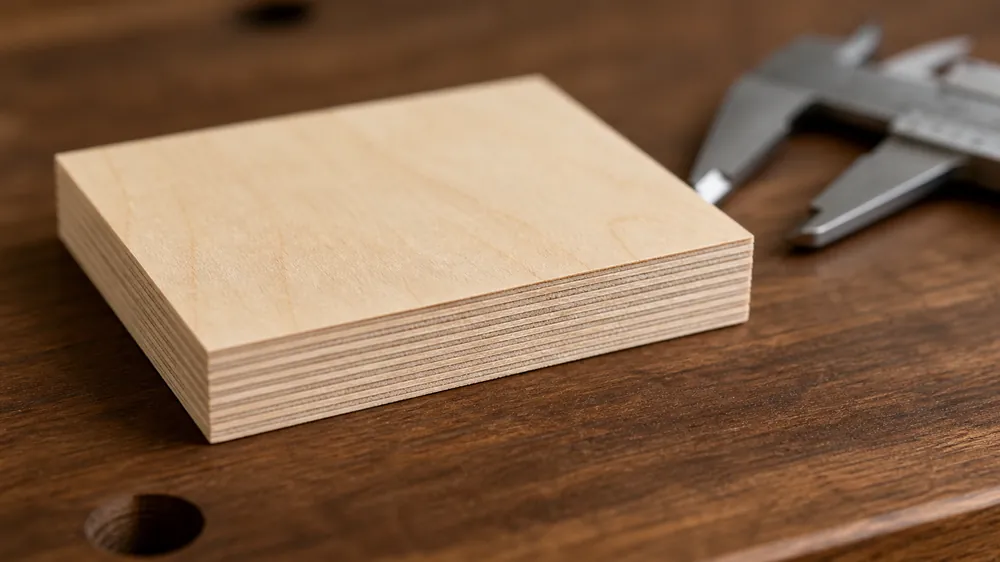
Baltic birch is technically a plywood, but it is engineered to a higher standard than the construction plywood you find at a hardware store. Construction plywood uses 3-5 layers of cheap softwood with knots, voids, and unrefined adhesives. Baltic birch uses 5-13 layers of clean birch veneer, food-safe waterproof adhesive (originally developed for European furniture), and zero internal voids. The cross-section reveals consistent material throughout — which is exactly what a laser needs to produce clean cuts.
Visual character: Pale, slightly warm cream color with subtle grain. The visible "ply lines" on the cut edges become a deliberate design feature rather than a defect. Reads as modern, clean, and slightly Scandinavian.
Laser performance: Cuts cleanly through 5mm in a single pass, through 12mm in 2-3 passes. Edges are smooth with light burn marks that sand off easily. Engraves with medium-brown contrast.
Cost: Roughly $4 per square foot for 5mm, $9 per square foot for 12mm at our supplier. Most affordable option of the four.
Best for: Most custom wood signs, name signs, family signs, cake toppers, address numbers, decorative wall pieces, layered multi-piece designs. The default choice unless you have a specific reason to upgrade. See our full custom wood signs service.
Avoid for: Outdoor permanent signage (UV bleaches the surface within months even with finishes), kitchen and bathroom installations (humidity cycling causes warping over years), and signs that need to stand alone at very large scales (16+ inches free-standing) without structural reinforcement.
Walnut Hardwood
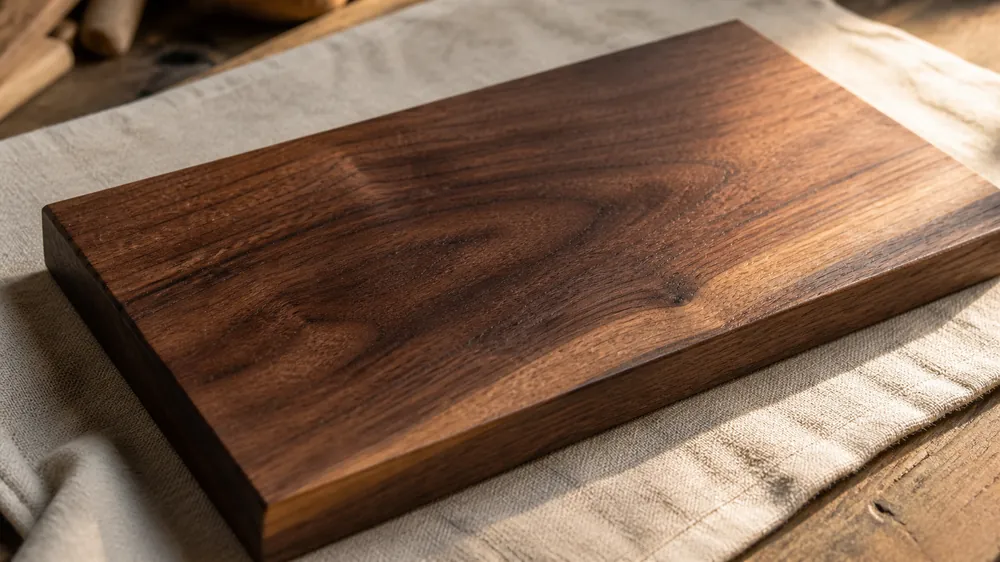
Walnut is the premium choice — solid hardwood with a rich dark-brown color, prominent grain, and a tactile density that no plywood can replicate. The grain catches the carved depth and adds warmth that improves with age. Walnut is the wood you choose when the sign is going to be a permanent feature and the price difference is worth it.
Visual character: Deep chocolate brown to nearly black at the heartwood, with sapwood showing pale cream streaks. The grain pattern is dramatic and varies piece to piece — every walnut sign is visually unique. Reads as premium, traditional, and craftsman-quality.
Laser performance: Cuts cleanly but slower than birch (denser material). Engraves to nearly black contrast — the highest visual depth of the four woods on this list. Detail work in walnut requires careful tuning of laser power to avoid scorching the surrounding grain.
Cost: Roughly 3-4× the cost of Baltic birch by area. A 24-inch family sign in walnut runs $200-300 vs $80-100 in birch.
Best for: Family name signs for permanent foyer placement, anniversary and milestone gifts, executive desk plaques, premium wall art, and any project where the recipient or buyer values craftsmanship and is willing to pay for solid hardwood.
Avoid for: Cost-sensitive orders, large surfaces where the cost compounds quickly, and projects where you plan to paint over the wood (covering walnut grain with paint defeats the entire reason to use it).
Maple Hardwood
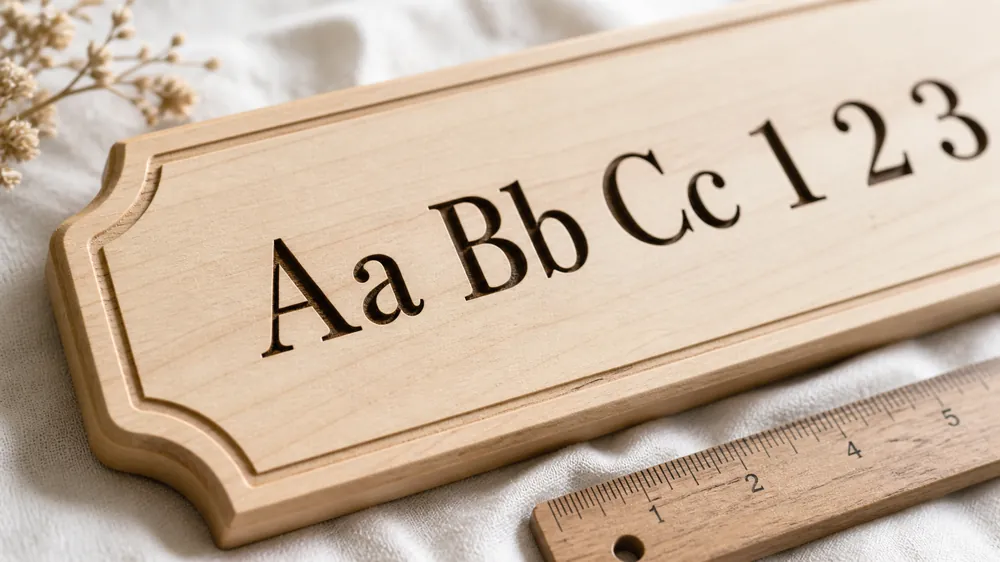
Maple is the underdog choice — pale, almost cream-colored, with very subtle grain. Most furniture buyers overlook it because it lacks the dramatic visual character of walnut or oak. But for custom signs and specifically for engraved plaques, maple has a unique advantage: extreme contrast on engraving.
Visual character: Pale white to light cream surface, very subtle grain pattern. Reads as clean, modern, and minimalist. Pairs especially well with painted finishes — the smooth surface takes paint evenly without grain bleed-through.
Laser performance: Cuts cleanly, similar speed to birch. The standout feature is engraving: maple darkens to deep brown or nearly black when laser-engraved, producing the highest visible contrast of the four woods. Fine detail and small text engrave more clearly on maple than on any other wood we work with.
Cost: Roughly 2-3× the cost of Baltic birch. Less expensive than walnut.
Best for: Engraved plaques where text contrast matters (name plates, recipe boards, memorial pieces), kitchen and serving boards (food-safe, light-colored, photogenic), small detail-heavy work, and signs that will be painted in solid colors.
Avoid for: Projects where you want visible grain as a design feature (use walnut or oak instead) and very large surfaces where the cost premium over birch becomes substantial without proportional visual gain.
Oak Hardwood
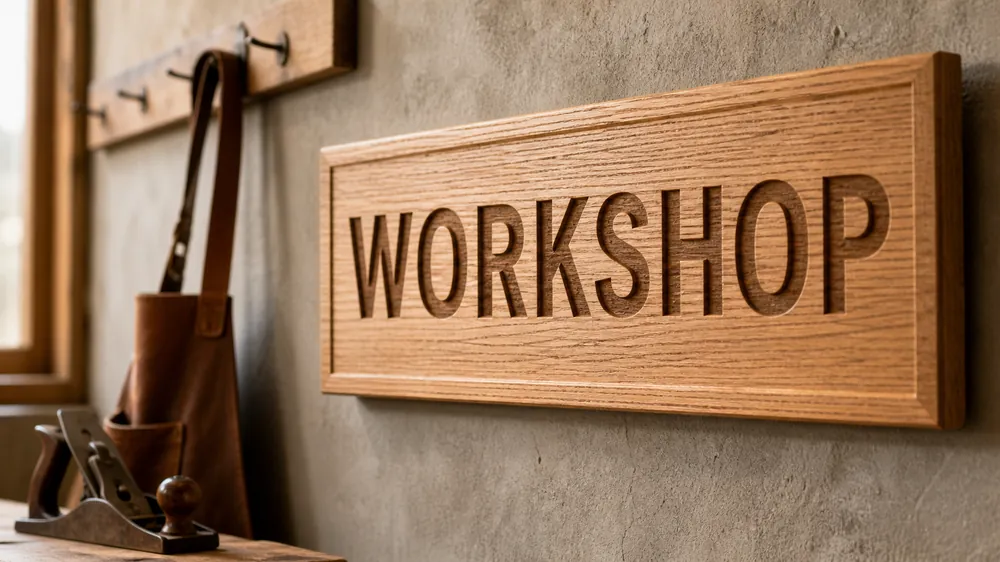
Oak is the traditional American sign wood — durable, prominently grained, with a warmth that suits craftsman, mission, and farmhouse interiors. The grain is open and pronounced, which becomes a dominant visual element of the finished piece.
Visual character: Pale to medium brown with strong, open, almost striped grain pattern. White oak is slightly cooler-toned than red oak. Reads as traditional, sturdy, and timeless. Pairs well with farmhouse, craftsman, and rustic interior styles.
Laser performance: Cuts cleanly enough for simple shapes but the open grain produces uneven edges on intricate designs. Fine script lettering does not survive oak as cleanly as birch or maple — the laser kerf can split along the grain. Best results are with bold simple silhouettes and large letter forms. Engraving works but the grain produces visible variation in burn depth.
Cost: Similar to maple — roughly 2-3× the cost of Baltic birch.
Best for: Traditional farmhouse-style family signs, large dimensional letters where grain becomes a design feature, exterior-protected signage (oak holds up better than other woods in covered porches and entryways), and signs that lean rustic or vintage.
Avoid for: Fine script lettering, intricate filigree designs, small detail engraving, and modern minimalist projects where prominent grain would compete with the design.
Side-by-Side Comparison
| Wood | Color | Cut Quality | Engraving Contrast | Cost (5mm) |
|---|---|---|---|---|
| Baltic birch | Pale cream, subtle | Excellent (clean) | Medium brown | $ (baseline) |
| Walnut | Deep chocolate, prominent grain | Excellent (slow) | Near-black, dramatic | $$$$ (3-4× birch) |
| Maple | Pale cream, very subtle | Excellent (clean) | Highest contrast | $$ (2-3× birch) |
| Oak | Pale-medium brown, strong grain | Good (less crisp) | Medium with grain variation | $$ (2-3× birch) |
Choosing for Specific Projects
- Nursery name sign for a baby crib — Baltic birch in 5mm. Affordable, light enough for adhesive mounting, takes paint cleanly if you want to color-match the room.
- Wedding gift with the family last name — walnut in 12mm. Premium feel, lasts decades, justifies the price as a memorable gift.
- Engraved memorial plaque — maple. Highest engraving contrast, neutral color works in any room.
- Farmhouse family sign over a fireplace — oak in 12mm with espresso stain. Grain becomes a design feature, traditional look.
- Wedding cake topper — Baltic birch in 5mm. Light, food-safe finish available, low cost for one-event use.
- Address numbers for the front of the house — oak with weatherproof finish (covered porch only). Or aluminum-laminated birch for full exterior exposure.
- Modern minimalist wall art piece — maple painted white or black, or Baltic birch raw. Clean surface lets the silhouette be the design.
Practical Notes
For thickness considerations within any of these woods, see our 5mm vs 12mm plywood guide — most of the principles transfer to hardwood as well. For file format requirements, see PNG vs SVG vs DXF.
If you want to see the full custom wood sign service line, browse our custom wood signs categories — name signs, family signs, engraved plaques, carved wall art, letters, cake toppers, and street signs. Or get an instant quote on a specific project at our quote tool.
Picking wood is a bigger decision than most online sign shops let you make. We let you choose because the choice actually matters — and we will not pretend birch and walnut are equivalent at the same price point. Different materials, different price tiers, different right answers depending on the project.
Frequently Asked Questions
Baltic birch plywood is the best all-around choice — clean cuts, takes finishes evenly, void-free interior, affordable. For premium signs that justify a higher price, walnut hardwood produces the richest visual result. Maple offers the highest contrast for engraving. Oak is durable but cuts less cleanly than birch.
Baltic birch uses 5-13 layers of clean birch veneer with food-safe waterproof adhesive and no internal voids. Regular construction plywood has 3-5 layers, contains knots and voids, and is made from cheaper softwoods. Baltic birch cuts cleanly under laser; regular plywood produces uneven edges and visible defects.
Maple produces the highest engraving contrast — dark brown to nearly black on a pale white surface. Walnut engraves nearly black on dark walnut, with high contrast against the visible grain. Maple wins for fine detail and small text; walnut wins for premium feel and larger pieces.
Oak is durable and beautiful but harder to laser-cut cleanly than birch — its open grain produces uneven edges on intricate designs. Best for simple shapes and large dimensional pieces where the grain becomes a feature. Avoid oak for fine script lettering or detailed engraving.
Baltic birch is the most affordable (around $4 per square foot for 5mm). Maple and oak hardwood run roughly 2-3× the cost of birch plywood. Walnut hardwood is roughly 3-4× the cost — premium but justified for high-end commissions. Pricing varies by thickness and supplier.
All four (birch, walnut, maple, oak) last 15-20+ years indoors with proper finishing. Outdoor exposure changes the answer — oak holds up best in semi-protected exterior settings, while birch plywood is not recommended for outdoor use even with finishes. For permanent exterior signage we recommend aluminum-laminated substrate or moving to dedicated outdoor materials.